Her word is her world: Aleyda's story
June 12, 2026 · Allison Brown
The story of Aleyda — a girl who had almost nothing, and refused to compromise the one thing she did.
She was seventeen years old, and she had already been fighting for most of her life.
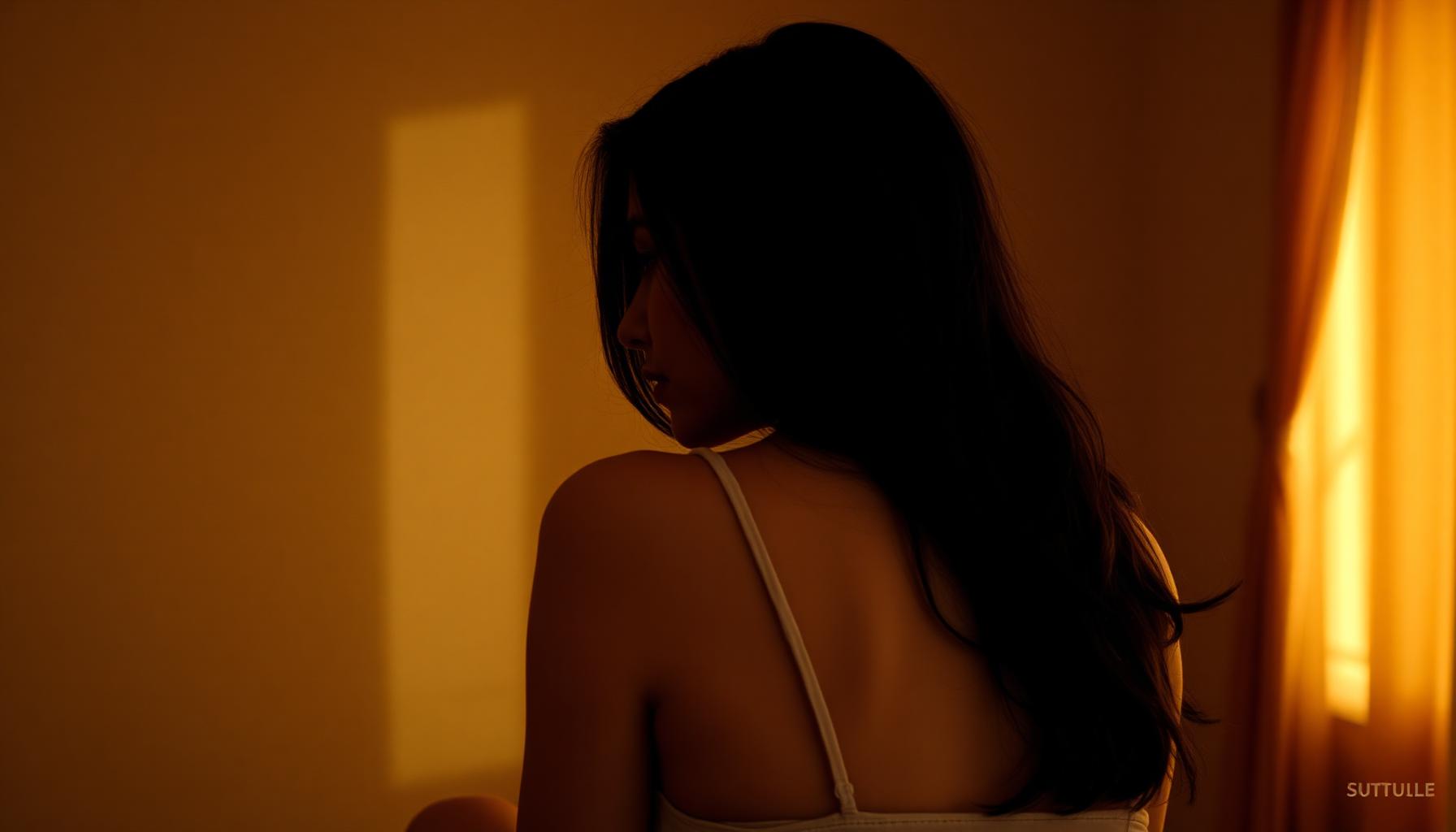
When Aleyda walked into our mission and asked for help, I could see her scoliosis before she said a single word. From the front, her shoulders were visibly uneven. From the side, the misalignment of her clavicle told the whole story. From the back, you could see and feel the distortion of her spine. She was in visible pain — the kind you can read on a person's face without asking. And yet there was something about her that stopped me. She looked like an angel in pain. Her demeanor was so gentle, so sweet — and underneath it, quietly, was something fierce.
She had been raised by her elderly grandparents in a small farmhouse without running water and, for a long time, without electricity. She had been caring for them for as long as she could remember. She had also been advocating for herself for just as long — because there was no one else to do it.
The System That Kept Failing Her
For years, Aleyda had been making the long journey to the capital city's public hospital about her scoliosis. Multiple doctors had told her the same thing: she needed surgery. And multiple times, the surgery had been scheduled. And multiple times, it had been canceled.
This is not unusual in Honduras. The reasons vary, but they are always real and always devastating. Sometimes the surgical supplies aren't available. I remember one period when the operating rooms at a public hospital were closed entirely because of a bacterial contamination in the surgical suites that they couldn't get under control. Sometimes surgeons prefer patients to be seen in their private clinics rather than receive free public care. Sometimes patients are required to source and fund their own internal surgical hardware — the screws, the rods — before the procedure can proceed. There is always a reason. And the reason is always the patient's problem to absorb.
Aleyda had been rescheduled for surgery three times. The fourth time she made that journey to the hospital, they told her that her condition had progressed so far that surgical intervention was no longer possible. And they sent her away.
She was seventeen years old. She had missed years of school because of the pain. She had no surgery, no solutions, and now no path forward through the system that had kept promising her one.
That is when she came to us.
The Race Against Time
The urgency was immediate. International charitable surgical programs exist to help children — but the window closes at eighteen. Aleyda was seventeen. I got to work.
Finding a US hospital and surgical team willing to take on an international case of her severity took a long time. Her scoliosis was advanced. She was close to aging out of eligibility. Case after case came back as too complex, too risky, or simply not possible to coordinate in time.
But we found someone. And Aleyda packed a borrowed suitcase and flew to the United States.
Four Months, Four Families
She spent four months in the United States — surgery, physical therapy, recovery — without a single family member by her side. She stayed with no fewer than four different host families who opened their homes to her, loved her, and cared for her through the hardest stretch of her life.
It was a beautiful experience and an extraordinarily difficult one. She was far from everything she knew, in pain, in a country whose language and culture were foreign to her, dependent on the kindness of strangers. And she discovered — or perhaps more accurately, she finally got to see confirmed — just how strong she was. I think she had always known it. But those four months gave her proof she could hold onto.
When she came home, she had more confidence. And she had a gratitude to God that seemed to radiate from her. The surgery had not been able to fully correct the curvature — she still carries visible deformity in her back, still lives with pain every day, and because of the remaining curvature, her lungs cannot expand as they should, making her more vulnerable to respiratory illness. These are realities she lives with quietly and without complaint.
The Education She Was Owed
After her recovery, it became clear that Aleyda wanted to finish high school. She had lost years to pain and to the relentless logistics of chasing a surgery through a broken system. I encouraged her. I assumed, at first, that public school would be manageable — but the degree of poverty she and her grandparents lived in made even the basics impossible. A uniform. A backpack. School supplies. These were not small things for her.
We stepped in. Aleyda was twenty-two years old when she started high school. She graduated at twenty-five. It took three years and every ounce of the determination she had been carrying her whole life. It was one of the greatest achievements of her life, and she earned every bit of it.
A few years later, she told me she wanted to study finance. We found a sponsor for her university education, and she enrolled. During those years, her grandfather passed away — a grief she carried while continuing to care for her grandmother, Doña Julia, who she cares for to this day.
In 2024, Aleyda graduated with her finance degree.
Her Word Is Her World
Aleyda will tell you plainly that she doesn't have much in this world. But she will also tell you — with the same plainness, and without any drama — that what she does have is her word. And she will not compromise it. She will not sully it.
Her community knows this about her. Her reputation for honesty has preceded her so far that she has been invited to serve as secretary of her local township. During the last election, she was chosen for a role that is as important as it is sobering: she was the person entrusted to physically carry the actual ballots to be counted. In Honduras, that is not a ceremonial task. It is a job that requires someone the community trusts absolutely — and one that is not without risk. They looked around and chose Aleyda. She has zero interest in politics. She has every interest in her community, and in making sure things are done with integrity.
When I needed someone to help with bookkeeping for Hope Scholars Honduras — someone to help our scholars track expenses, collect receipts, and remain fully accountable for the funding they receive — I thought of Aleyda immediately. I am a fairly good judge of character. I saw what her whole community had already seen. She took the role with the same quiet seriousness she brings to everything. She has been an extraordinary asset, and an even better mentor to our current scholars.
Doña Julia and the House That Love Is Holding Up
I stayed with Aleyda and Doña Julia last week. I hadn't been to their home in over ten years, and I wasn't prepared for what I found.
Doña Julia is everything you picture when you imagine a Latina grandmother. She is about five feet tall — tiny, weathered skin, wrinkles from decades of laughter, a sparkle in her eye that age has not dimmed. She is always in a dress with a little apron. She is always trying to feed you, even though she herself is thin and rarely has an appetite. She gets a little indignant if she feels she's not getting enough attention, and she will redirect the room toward herself in the most endearing way imaginable. She is sharp, funny, comfortable with her own mortality, and she has one clear wish: that Aleyda will be taken care of.
From the moment I arrived, I was showered with attention and hospitality. Doña Julia gave me a dress and insisted I try it on. I begged to take a bath first, and she told me to get to it. We shared a dinner of 'sopa de gallina india' and they offered me the bed to sleep in. When I opted for the hammock, Doña Julia seemed horrified by my choice, but she allowed it. The next day, when they saw that my tortilla making skills were abismal, they gave me a lesson. I felt completely at home.
And the walls around us were caving in.
The farmhouse is nearly a hundred years old. The roof leaks, and the water is destroying the walls. The latrine has caved in. Aleyda has been quietly trying to save money to address these things, but it is slow going. She has not complained. She has not asked. In all the years I have known her, she has never once asked for more than what was offered — because she is so genuinely grateful for what she has received that she would never want to appear to be exploiting anyone's generosity.
The only reason I know the full extent of the situation is because I was there. And the only reason she finally mentioned it at all is because she is worried about Doña Julia — about the distance to the latrine in the dark, about the risk of a fall, about a broken hip for a woman her age. She asked for her grandmother. She would not have asked for herself.
I walked away from that visit thinking: I should have known sooner. I should have asked.
A Home Worth Keeping
We are currently seeking approximately $12,000 to put a new roof on Aleyda's farmhouse and construct a proper bathroom close to the home. A roof to stop the leaks that are destroying the walls. A safe, accessible latrine so that Doña Julia does not have to make a dangerous walk in the dark.
Aleyda does not want to leave this land. It is her grandparents' land, and it will be hers. She wants to preserve it, restore it, and build her future on it. That is not a small dream — it is a deeply rooted one, and it is entirely in keeping with who she is: a woman who does not abandon what she loves, who keeps her word, and who takes care of her people.
The love inside that house is keeping the walls up. But love shouldn't have to do that alone.
What Aleyda Has Taught Me
I have known Aleyda for years now, and I am still learning from her. She is satisfied. She does not try to live above her station, does not put on airs, does not keep score of what she has been through or what she is owed. She is genuinely, consistently grateful — to God, to the people who have helped her, to the community that sees her.
She is also a legacy. A girl who was sent away by a hospital at seventeen, who packed a borrowed suitcase and flew alone to a foreign country for surgery, who went back to high school at twenty-two, who graduated with a finance degree at an age when many people have stopped starting over — she is proof of what is possible when someone with that kind of character is given even a fraction of the opportunity they deserve.
That is what Hope Scholars Honduras exists to do. To find the Aleydas. To walk alongside them. And to make sure that the only thing standing between someone and their potential is not a leaking roof or a missing backpack or a surgery that keeps getting canceled.
She is going to continue forward no matter what. I am just grateful to have been part of the journey.
—