The Egg That Counted as Much as a Lempira
A reflection on partnership, dignity, and why no one at Hope Scholars Honduras gets a completely free ride.
August 24, 2026 · Allison Brown
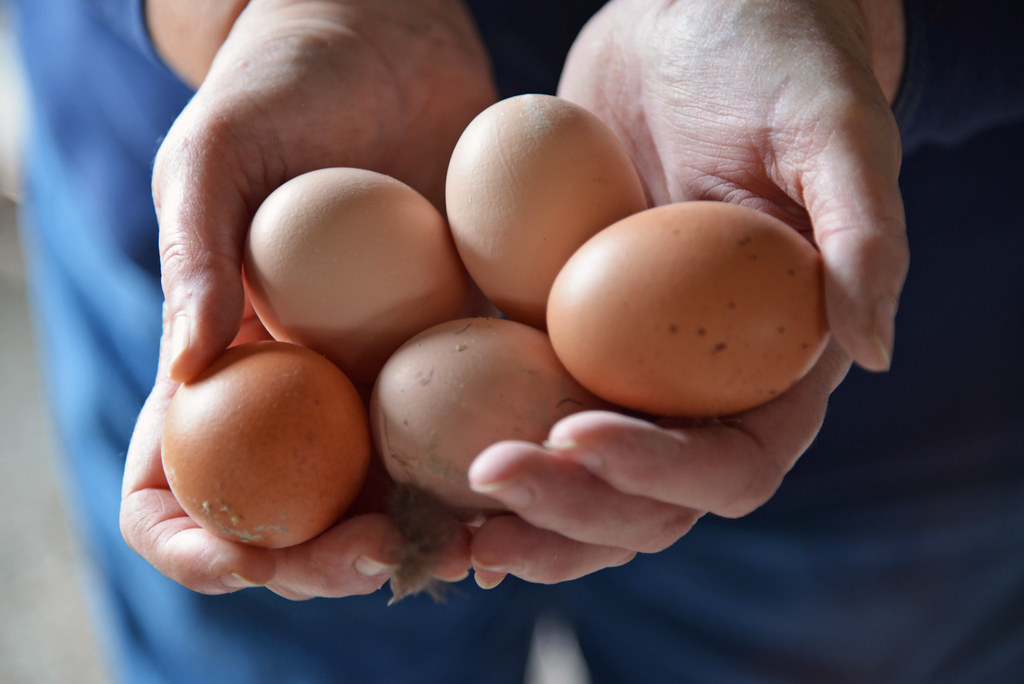
A woman once paid me with a few eggs, held in her hand.
This was years ago, long before Hope Scholars Honduras existed. I was running clinics in Honduras — rural, under-resourced, the kind of place where cash was the least reliable currency most families had. She needed care. She had no money. What she had was a few eggs, and she held them out to me like it was the most natural transaction in the world. Because to her, it was.
I took the eggs. Not because I needed them. Because she needed to give them — and partnership only works when everyone involved gets to keep their dignity. If I had waved her off and treated her like she had nothing to offer, I would have taken something from her far more valuable than a few eggs. I would have told her, without saying a word, that she didn't count as a real participant in her own care. That she was only a recipient. I have never wanted anyone to walk away from me believing that about themselves.
What We Actually Ask For
Every family in Hope Scholars Honduras contributes something toward their scholar's education, every month. Money, when there's money. Eggs, produce, a trade, a few hours of labor, when there isn't. What we're asking for was never really a dollar amount. It's a “we're in this together.”
I want to be honest about something: I could structure this program so that families contribute nothing. We have the means, in most cases, to simply pay for everything. I choose not to. And I want to explain why, because from the outside, it can look like the opposite of compassion — like we're asking already-struggling families to prove themselves before we'll help.
That is not what this is.
The Turn
Here is what years of clinic work taught me, long before I ever thought about scholarships: almost no one is actually unable to contribute something. Not nothing. Something. The families I have met in the poorest corners of Honduras — families with dirt floors, families rationing what little food they have — nearly all of them can find something to bring to the table, if bringing something matters to them.
The rare cases where a family truly cannot participate at all are almost never about ability. They're about willingness. And that is not a financial conversation. That's a values conversation — one I have directly, honestly, with a family, not one I bury in a line on a form.
A free ride isn't a partnership. It's a transaction. And I am not interested in running a transaction.
Why It Matters
When a family contributes — whatever form that takes — something shifts. The scholarship stops being something that happens to them and becomes something they are part of. The mother who sends a few eggs with her daughter's monthly receipts is not a charity case. She is a partner. She has skin in the game, even when the game is stacked against her in every other way.
This is the part I want to say plainly: dignity is not something we hand to families along with a scholarship. Dignity is what happens when both sides bring something and both sides receive something. It cannot flow in only one direction. The moment I let a family believe they have nothing worth contributing, I have quietly told them they are less than a partner — no matter how warmly I said it, no matter how good my intentions were. Accepting what someone offers, even a few eggs, is sometimes the most respectful thing you can do for them.
I have watched what this does for scholars, too. They are not recipients of someone else's generosity. They are participants in their own future, alongside a family who showed up for them in whatever currency they had.
There is one exception, and I want to be honest about that too: extraordinary situations — a scholar with no household at all, no family to contribute anything, in any form — do get full support. But even then, nothing about the relationship is transactional. Nothing about it is charity-flavored. We find another way for that scholar to be a partner in their own story, because partnership is the point, not the payment.
What This Means for You
If you're a donor reading this, I hope it changes how you think about your own giving. You are not rescuing anyone. You are joining a partnership that a family is already showing up for — with eggs, with labor, with whatever they have. Your contribution and theirs are the same kind of thing, just different currencies. Neither one of you is above the other in this.
If you're a family considering applying: we are not testing whether you're poor enough or not poor enough. We are asking whether you're willing to stand with us. That's a much simpler question, and most families already know the answer.
I still think about those few eggs in that woman's hand. She didn't owe me anything. She gave anyway, and I let her — because taking them was how I told her she mattered. That is the whole philosophy, right there, and it hasn't changed since.
Stand with a family who is already showing up. Give one-time or monthly at www.hopescholarshonduras.org/donate.